Machines don’t warn you before they start. A conveyor belt kicks on without notice. A press lowers unexpectedly. A valve releases pressurized fluid. These aren’t rare events—they happen when safety procedures break down. The most effective defense? A properly executed tag and lockout procedure.
This isn’t just about attaching a lock and hanging a tag. It’s about verifying zero energy, ensuring accountability, and preventing life-altering injuries. Across manufacturing, utilities, and maintenance operations, failure to follow a consistent tag and lockout procedure leads to amputations, electrocutions, and fatalities. The solution isn’t complexity—it’s discipline.
What Exactly Is a Tag and Lockout Procedure?
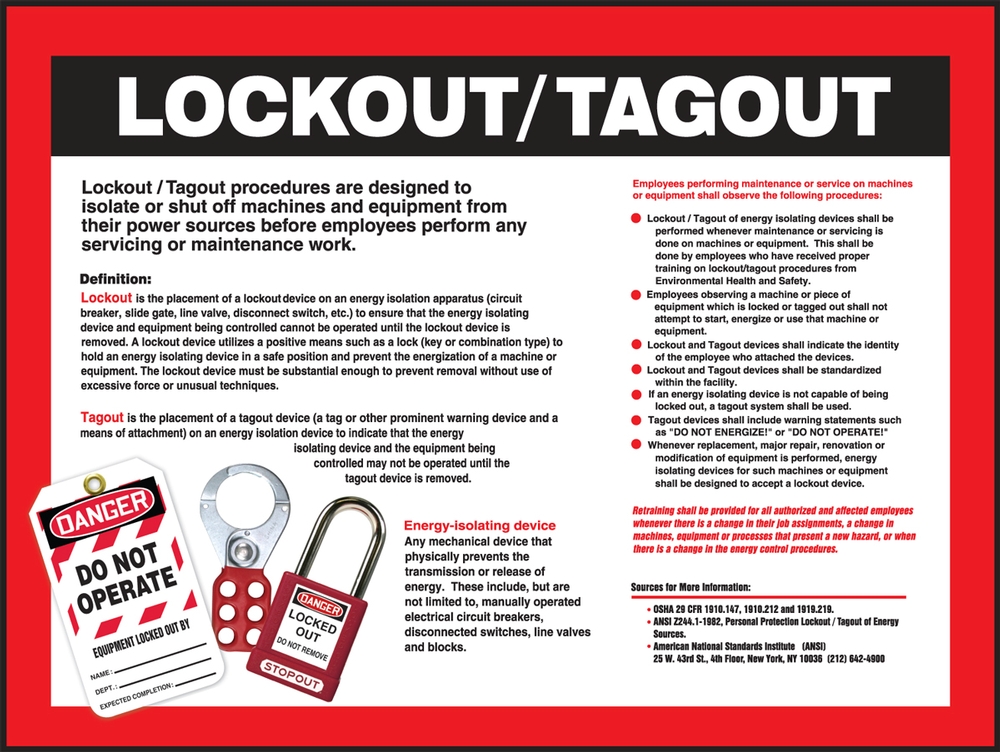
A tag and lockout procedure—commonly called Lockout/Tagout or LOTO—is a safety process that isolates energy sources from equipment and prevents accidental startup during servicing or maintenance.
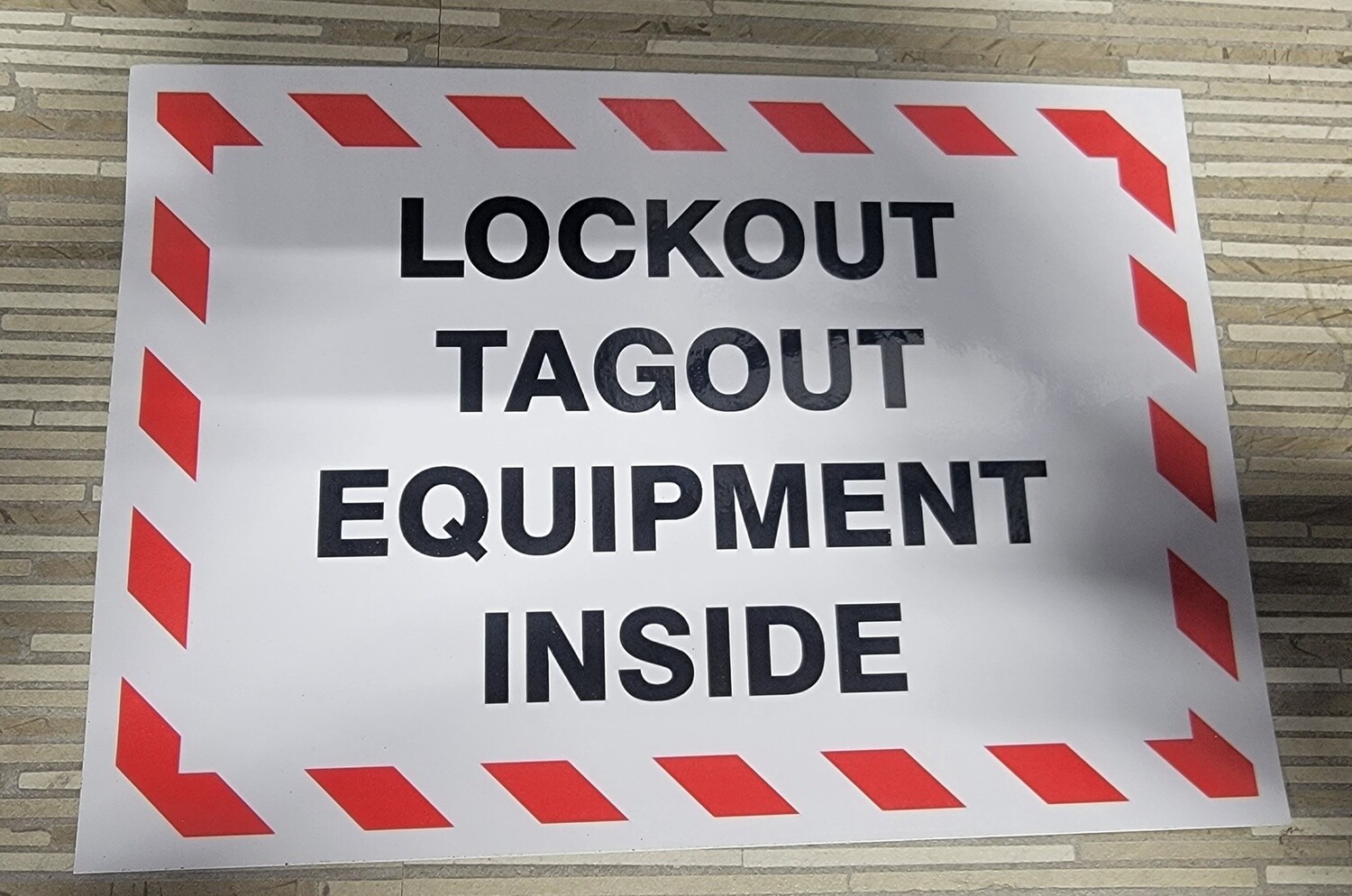
"Lockout" means placing a physical lock on an energy-isolating device, like a circuit breaker or valve. That lock can only be removed by the person who applied it. "Tagout" involves attaching a warning tag that identifies who locked the equipment, when, and why. Together, they form a system of control that protects workers when machines are most dangerous: when they’re supposed to be off.
This isn’t optional. OSHA standard 29 CFR 1910.147 mandates a formal lockout/tagout program for any situation where unexpected energization could harm employees. That includes not just electrical power, but also hydraulic, pneumatic, chemical, and gravitational energy.
The 6-Step Tag and Lockout Process That Actually Works
A robust tag and lockout procedure follows a repeatable sequence. Deviate from it, and risk follows.
1. Preparation Before any work begins, the authorized employee must identify the type and magnitude of energy involved. Is the machine powered by electricity, steam, compressed air? What residual energy remains after shutdown? This step requires reviewing equipment-specific LOTO procedures and gathering the right locks, tags, and tools.
Example: A technician servicing a hydraulic press checks the system diagram and confirms that trapped fluid pressure must be bled off before lockout.
2. Notification Inform all affected employees that maintenance is about to start. This ensures no one tries to restart a machine they think is just down temporarily.
Common mistake: Failing to notify a machine operator on a different shift, who later attempts to run the line, unaware it’s under service.
3. Shutdown Use the normal stopping procedure to shut down the machine. Press the emergency stop, turn off controls, or disengage power via control panel.
Important: E-stop buttons aren’t isolation devices. They don’t cut off energy—they just interrupt control circuits. Lockout must go further.
4. Isolation Physically disconnect the energy source. Flip the circuit breaker to OFF and lock it. Close and lock a line valve. Block a conveyor with a mechanical stop. This is where real protection begins.
Use only OSHA-compliant lockout devices—industrial padlocks, valve locks, plug covers, or breaker lockouts—not zip ties or tape.
5. Apply Lock and Tag Each worker applies their own personal lock and tag. The tag must include: - Name of the authorized employee - Date and time of lockout - Reason for lockout - Department or work group
Group lockout boxes are used when multiple people are working on the same equipment, but each person still uses their own lock.
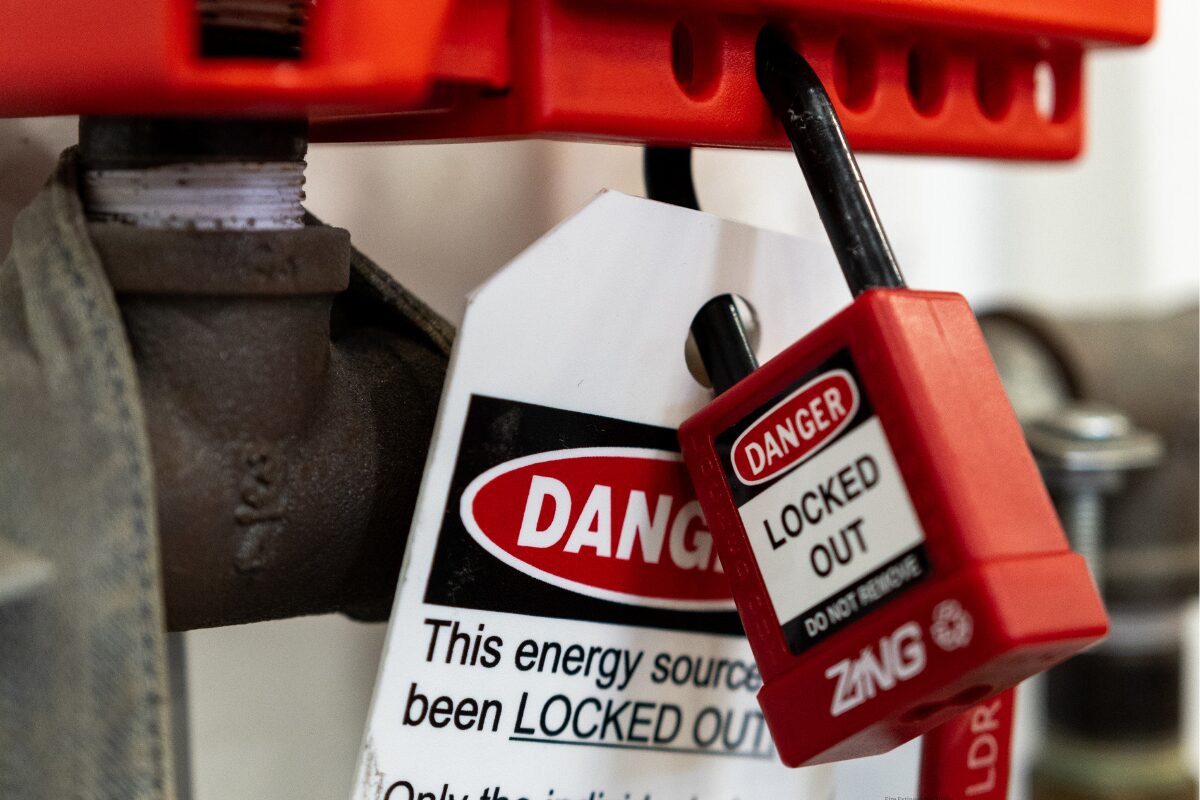
6. Verify Zero Energy This is the most critical, most skipped step. After locking out, test the machine by trying to start it. Press the start button. Turn the valve. If nothing happens, and you’ve confirmed all energy sources are neutralized, it’s safe to proceed.
Never assume. Always verify.
Why Tags Alone Aren’t Enough
Tagout—the use of warning tags without physical locks—is allowed under OSHA but only when a lock can’t be used. Tags are warnings, not barriers.
A tag can be ignored. A lock cannot be bypassed without deliberate force or key access.
In environments where tag-only procedures are used: - 70% of LOTO violations involve unauthorized removal of tags - 43% of incidents occur because someone assumed the machine was safe
Tags must always be paired with locks unless engineering makes locking impossible—and even then, additional protective measures are required, like removing circuit plugs or blocking moving parts.
Real-World Failures and What They Teach Us
In 2022, a maintenance technician at a food processing plant was clearing a jam in a conveyor. The machine wasn’t locked out. Another worker, unaware of the maintenance, restarted the line. The outcome: a fatal entanglement.
The root cause? A broken tag and lockout procedure. No lock was applied. The tag, when it existed, wasn’t visible.
Another case: A mechanic in a fabrication shop was repairing a robotic arm. He locked out the main panel, but didn’t account for stored energy in the arm’s hydraulic accumulator. When he loosened a fitting, the arm dropped, crushing his hand.
Both cases violated core LOTO principles: - One skipped isolation and verification - The other failed to control all energy sources
These aren’t outliers. According to the Bureau of Labor Statistics, nearly 10% of serious workplace accidents in manufacturing involve failure to control hazardous energy.
Equipment-Specific LOTO Challenges
Not all machines are the same. A forklift, a boiler, and a CNC machine each present unique lockout challenges.
High-Pressure Systems Pneumatic and hydraulic equipment store energy even after shutdown. Bleed valves, relief lines, and mechanical blocking must be part of the procedure.
Multiple Energy Sources A packaging line may use electricity, air pressure, and heat. Each requires separate isolation points.
Complex Machinery Robots and automated systems often have backup batteries or remote restart functions. LOTO procedures must disable communication modules or network connections that could trigger activation.
Shared Equipment In facilities with rotating shifts, clear shift交接 (handoff) protocols are needed. Outgoing workers must brief incoming supervisors. Locks should never be left in place without explanation.
Who Is Responsible for LOTO Compliance?
Two roles are defined under OSHA: - Authorized Employees: Those who perform servicing and apply lockout devices. They must be trained annually and understand energy control procedures. - Affected Employees: Operators who use the equipment but don’t service it. They must know not to remove locks or attempt to operate locked-out machinery.
Management is responsible for: - Developing written LOTO procedures for each machine - Providing lockout devices and training - Conducting annual audits of LOTO practices
A common failure? Assuming that because employees wear PPE, they’re protected. PPE is the last line of defense. LOTO is the first.
Building a Sustainable Tag and Lockout Program
A checklist isn’t enough. Culture is.
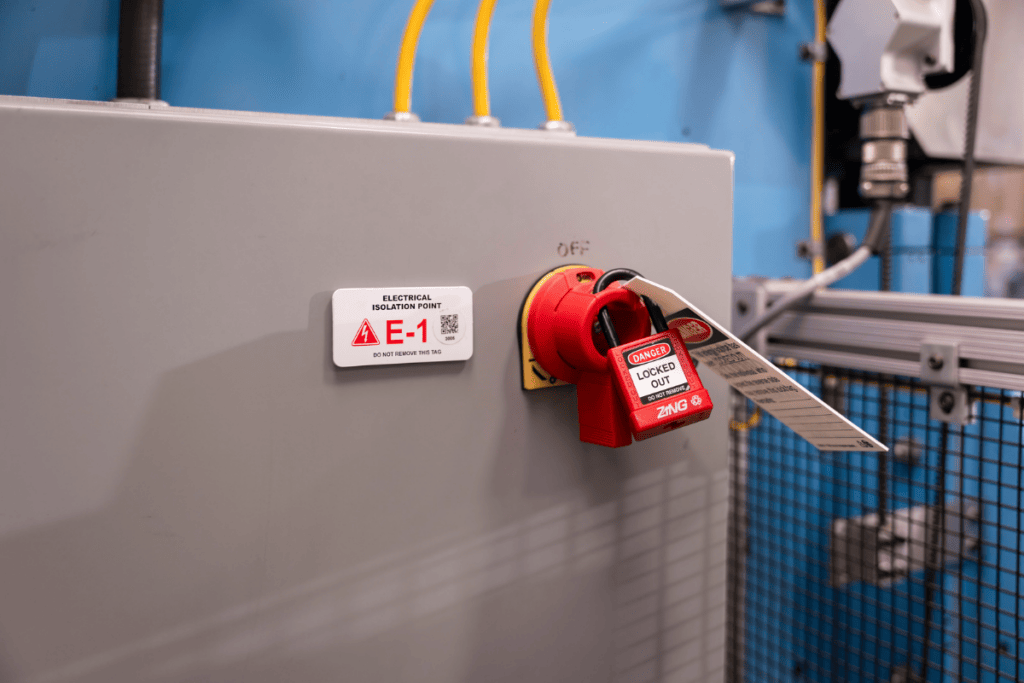
The best LOTO programs include: - Machine-specific procedures posted near isolation points - Standardized lockout kits for each department - Regular drills and surprise audits - Digital LOTO logs for tracking lock application and removal
One automotive plant reduced LOTO incidents by 80% over two years by introducing color-coded locks: red for maintenance, yellow for contractors, blue for electricians. Visual cues reduced confusion during shift changes.
Another facility uses smart lockout stations with RFID tags. When a worker logs in, the system records who locked what and when. It sends alerts if a lock remains past the expected service window.
Technology helps, but discipline drives results.
Common Mistakes That Undermine LOTO Safety
Even experienced teams make errors: - Using master keys to remove locks—a direct violation of OSHA - Skipping verification because “it’s just a quick fix” - Sharing locks or using “team locks” without individual accountability - Ignoring stored energy like springs, capacitors, or suspended loads - Poor tag quality—faded, handwritten, or incomplete information
The most dangerous assumption? “This machine isn’t powerful enough to hurt me.” Energy isn’t always obvious. A small motor, under tension, can cause severe lacerations.
Final Step: Release and Restart
LOTO doesn’t end with repairs.
Before removing locks: - Ensure all tools are clear - Confirm all workers are at a safe distance - Verify that guards and safety devices are reinstalled - Notify affected employees that operations will resume
Remove locks only by the person who applied them. If that person isn’t available, a designated supervisor may remove the lock under a formal policy—including attempts to contact the employee and verification that the machine is safe.
Never restart a machine until every lock is off and every tag is accounted for.
A tag and lockout procedure isn’t paperwork. It’s a lifeline. It transforms a moment of vulnerability—when a machine is open, exposed, and unguarded—into a controlled, predictable state. Whether you’re replacing a motor, clearing a jam, or inspecting a valve, the same rules apply: isolate, lock, tag, verify.
Implement it consistently. Audit it regularly. Enforce it without exception. Because the next life it saves could be your own.
FAQ
What’s the difference between lockout and tagout? Lockout uses physical devices to prevent energy restoration; tagout uses warning tags. Lockout is preferred because it physically blocks startup.
Can a supervisor remove a lock if the worker doesn’t return? Yes, but only under a formal policy that includes verification of employee location and machine safety.
Is LOTO required for corded plug-in equipment? Yes, if the plug isn’t under the exclusive control of the worker. Unplugging and locking the plug end satisfies LOTO in many cases.
How often should LOTO training occur? OSHA requires annual retraining for authorized employees and whenever procedures change.
Can multiple people work on the same machine under LOTO? Yes, using a group lockout box. Each worker applies their own lock to the box, which holds the primary energy isolator.
Do battery-powered tools require LOTO? Yes, if they store hazardous energy. Remove batteries, block moving parts, and tag the device.
Are there industries where LOTO isn’t required? Minor tool changes or routine operations may be exempt, but any servicing involving hazardous energy requires LOTO.
FAQ
What should you look for in What Is a Tag and Lockout Procedure and Why It Matters? Focus on relevance, practical value, and how well the solution matches real user intent.
Is What Is a Tag and Lockout Procedure and Why It Matters suitable for beginners? That depends on the workflow, but a clear step-by-step approach usually makes it easier to start.
How do you compare options around What Is a Tag and Lockout Procedure and Why It Matters? Compare features, trust signals, limitations, pricing, and ease of implementation.
What mistakes should you avoid? Avoid generic choices, weak validation, and decisions based only on marketing claims.
What is the next best step? Shortlist the most relevant options, validate them quickly, and refine from real-world results.