Workers are injured every year during equipment maintenance—not because machines fail, but because they start up unexpectedly. The root cause? Inadequate or missing lockout tagout training documents. A properly structured LOTO training document isn’t just a binder on a shelf; it’s a living part of your safety culture. It defines how employees recognize hazardous energy sources, apply control measures, and verify isolation—step by step. Without it, even experienced technicians risk life and limb.
This guide breaks down what makes a lockout tagout training document effective, compliant, and practical in real-world environments—from manufacturing floors to utility systems.
Why a Lockout Tagout Training Document Is Non-Negotiable
OSHA standard 29 CFR 1910.147 mandates that every facility with hazardous energy sources implement a formal energy control program. Central to that program is documentation—especially training records and procedures.
A lockout tagout training document serves three critical functions:
- Standardization – Ensures every employee follows the same proven steps.
- Compliance – Acts as legal proof that training occurred and met regulatory requirements.
- Clarity – Cuts through confusion during high-risk maintenance tasks.
Without it, you're relying on memory, assumptions, or verbal instructions—each a potential path to injury. In one documented case, a technician reconnected a conveyor belt without verifying isolation, leading to a fatal entanglement. The investigation found no updated LOTO training records and no site-specific procedures. This wasn’t an equipment failure—it was a documentation failure.
Core Components of an Effective LOTO Training Document
A strong training document isn’t a copy-paste template. It’s tailored, actionable, and thorough. Here’s what must be included:
#### 1. Scope and Purpose Statement Define which machines, systems, and energy sources the document covers. Include exclusions if applicable (e.g., corded tools under 60 seconds of disconnection).
Example: “This procedure applies to all hydraulic presses in Production Line B, including primary and secondary power sources (electrical, pneumatic).”
#### 2. Roles and Responsibilities Clearly outline who can perform LOTO (authorized employees) and who must stay clear (affected employees). Define retraining cycles (minimum annual, or after procedural changes).
#### 3. Step-by-Step Energy Control Procedures Detail each action—from shutdown to verification. Use numbered steps, visual cues, and warnings.
Sample step: 4. Locate and open the main disconnect switch. 5. Place personal lock and tag on the isolation point. 6. Attempt to restart the machine (with controls) to confirm zero energy.
#### 4. Energy Source Identification List every energy type (electrical, mechanical, hydraulic, thermal, chemical) and where isolation points are located.
#### 5. Device Specifications Include lock types, hasps, tags, and padlocks used. Specify whether locks are keyed alike or personal.
#### 6. Group Lockout Procedures Cover how multiple workers isolate one machine. Define the role of the primary authorized employee.
#### 7. Retraining and Certification Records Include a log template with employee name, date, trainer, and competency checklist.
Common Mistakes That Undermine LOTO Training Documents
Even facilities with documents on file often fall short in practice. These recurring errors compromise safety and compliance:
- Using generic templates without site adaptation
- A boilerplate LOTO document for “all machinery” ignores unique risks. A CNC mill has different lock points than a forklift battery charger.

- Failing to update after equipment changes
- New machinery or retrofits alter energy pathways. If the document isn’t revised, the procedure becomes obsolete.
- Skipping hands-on verification steps
- “I think it’s off” is not a safety protocol. The document must mandate testing—like trying to start the machine after isolation.
- Poor readability
- Complex jargon, tiny fonts, or lack of visuals reduce usability during stressful situations.
- No employee sign-off
- Training is only complete when the worker signs a record. Without this, OSHA considers it unverified.
Fix these gaps by auditing your document annually and involving frontline workers in the review process.
How to Implement a LOTO Training Document in 5 Steps
Creating the document is just phase one. Implementation determines real-world impact.
- Conduct a Machine Audit
- Walk through each piece of equipment. Identify all energy sources, isolation points, and unique hazards. Document with diagrams or photos.
- Draft Procedures with Input from Technicians
- Maintenance staff know pain points. Use their feedback to make steps clear and practical.
- Integrate with Broader Safety Programs
- Link LOTO training to onboarding, job hazard analyses (JHAs), and permit-to-work systems.
- Train and Certify Employees
- Conduct classroom and hands-on sessions. Require employees to demonstrate proper lock application and verification.
- Audit and Improve Quarterly
- Observe real lockout scenarios. Check for deviation from the document. Update as needed—especially after near-misses.
Pro tip: Use a shadowing system where new technicians perform a lockout under supervision. Document the session in their training file.
LOTO Training Document vs. Energy Control Plan: What’s the Difference?
It’s easy to confuse these two, but they serve distinct roles:
| Document | Purpose | Scope |
|---|---|---|
| LOTO Training Document | Train employees on correct procedures | Focuses on how to lock and tag, roles, compliance |
| Energy Control Plan (ECP) | Outline the entire safety program | Includes policy, equipment list, procedure inventory, audit schedule |
Think of the ECP as the master safety blueprint. The LOTO training document is one critical component—specifically for education and skill verification.
You need both. Relying only on a training document risks missing systemic issues. Relying only on a broad ECP leaves workers undertrained.
Real-World Use Cases: Where LOTO Training Documents Prevent Disasters
#### Case 1: Chemical Plant Pump Maintenance A maintenance team needed to service a high-pressure solvent pump. The LOTO document specified isolating both the motor disconnect and the inlet valve, with dual locks. One technician almost skipped the valve isolation—until the document’s flowchart reminded him of residual pressure risk. The near-miss was logged, and the document was later updated with an added warning box.
#### Case 2: Food Processing Facility An operator bypassed a guard to clear a jam, assuming the machine was off. The LOTO training document had not been reviewed in three years and lacked clear “affected employee” guidance. After the incident, the facility revised the document, added diagrams, and mandated annual refreshers. Injury rates dropped 70% over 18 months.
These cases show that a document isn’t just paperwork—it’s a frontline defense.
Tools and Templates to Build Your LOTO Training Document
While OSHA doesn’t prescribe a specific format, using structured tools improves consistency and compliance. Here are five reliable resources:

| Tool | Purpose | Best For |
|---|---|---|
| OSHA 3120 Guide | Free PDF with sample procedures and checklists | Small to mid-sized operations |
| Lockout Tagout Pro by Creative Safety Supply | Digital platform for creating and storing LOTO procedures | Facilities with 50+ machines |
| EHS Insight LOTO Module | Integrates training documents with incident tracking | Enterprises needing audit trails |
| SafeSite Facility | Mobile app for documenting energy control steps on-site | Technicians performing frequent maintenance |
| Custom Templates (Word/Google Docs) | Fully editable, brandable documents | Companies needing internal control |
Choose based on your scale and tech readiness. Even a well-formatted Word doc beats no document—but digital systems offer tracking and alerts that reduce human error.
Training Pitfalls and How to Avoid Them
Even with a solid document, training can fail if delivery is weak.
- One-size-fits-all training
- Don’t teach warehouse staff the same way as electricians. Customize content by role.
- No practical evaluation
- Written tests are useful, but require hands-on assessment. Can the employee correctly apply a lock on a live simulation?
- No language or literacy consideration
- If your workforce speaks multiple languages, the document must be translated. Use icons and visuals to support comprehension.
- Infrequent retraining
- Annual refreshers aren’t enough after major incidents or equipment changes. Trigger retraining immediately.
Insight: One facility reduced errors by 90% simply by adding a 5-minute video recap to their LOTO training document—accessible via QR code on each machine.
Finalize, Enforce, and Evolve Your LOTO Training Document
A lockout tagout training document isn’t a project with an end date. It’s a dynamic part of your safety infrastructure. Start by auditing your current materials. If they’re outdated, incomplete, or unused, rebuild them with input from the people who use them daily.
Print copies for high-traffic areas. Store digital versions in accessible drives. Require sign-offs after every training session. And most importantly, verify through observation that the document is followed—not just filed.
When an employee locks out a machine tomorrow, their safety depends not on hope, but on the clarity and credibility of your training document. Make it worthy of that trust.
FAQ
What should a lockout tagout training document include? It must define roles, list energy sources, provide step-by-step isolation procedures, specify lockout devices, and include training records and retraining requirements.
Who needs to be trained on the LOTO document? Authorized employees (those who perform maintenance) and affected employees (those who operate or use the equipment) must both receive role-specific training.
How often should the LOTO training document be updated? Review and update at least annually, or whenever equipment, processes, or regulations change.
Can a LOTO training document be digital? Yes, digital versions are acceptable if they’re accessible to employees during work hours and protected from unauthorized changes.
Is a signed acknowledgment necessary? Yes. Employee signatures prove training occurred and are required for OSHA compliance.
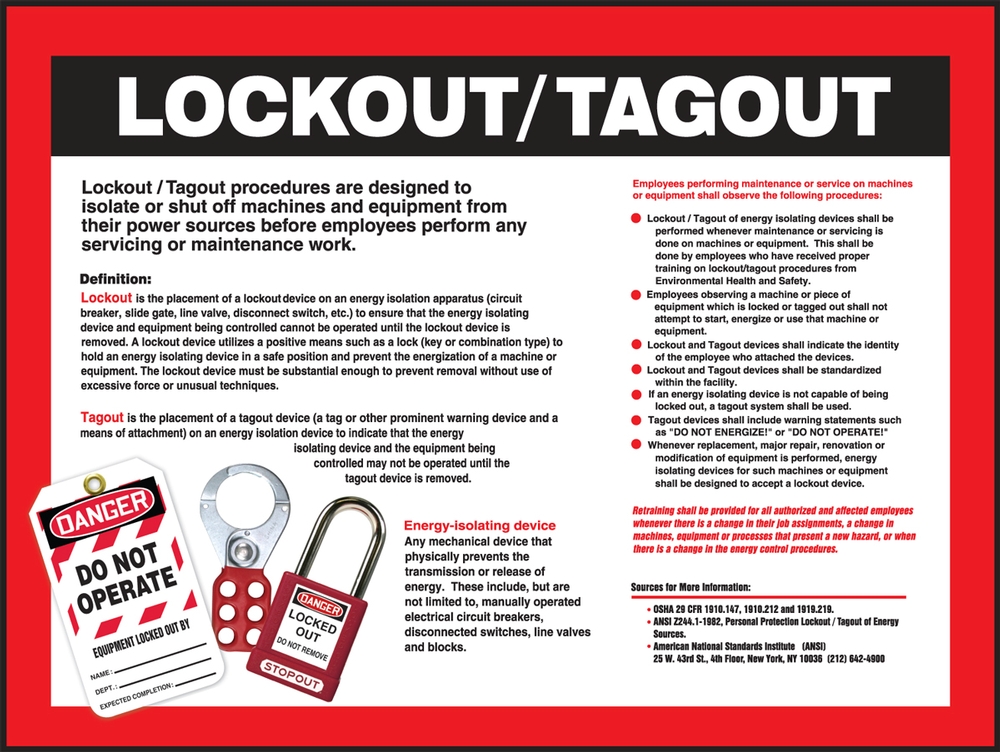
What’s the difference between lockout and tagout? Lockout uses a physical lock to prevent energizing, while tagout relies on a warning tag. Lockout is preferred; tagout alone is only allowed when locks can’t be used.
Can one document cover multiple machines? Only if the machines are identical in energy sources and isolation points. Otherwise, each unique machine or process needs its own procedure.
FAQ
What should you look for in Lockout Tagout Training Document Essentials for Compliance? Focus on relevance, practical value, and how well the solution matches real user intent.
Is Lockout Tagout Training Document Essentials for Compliance suitable for beginners? That depends on the workflow, but a clear step-by-step approach usually makes it easier to start.
How do you compare options around Lockout Tagout Training Document Essentials for Compliance? Compare features, trust signals, limitations, pricing, and ease of implementation.
What mistakes should you avoid? Avoid generic choices, weak validation, and decisions based only on marketing claims.
What is the next best step? Shortlist the most relevant options, validate them quickly, and refine from real-world results.